

5 Strategies For Stopping Bad Data In It’s Tracks
For knowledge groups, dangerous knowledge, damaged knowledge pipelines, stale dashboards, and 5 a.m. hearth drills are par for the course, notably as knowledge workflows ingest increasingly more knowledge from disparate sources. Drawing inspiration from software program growth, we name this phenomenon knowledge downtime– however how can knowledge groups proactively forestall dangerous knowledge from hanging within the first place?
In this text, I share three key methods a number of the finest knowledge organizations within the business are leveraging to revive belief of their knowledge.
The rise of information downtime
Recently, a buyer posed this query: “How do you forestall knowledge downtime?”
As a knowledge chief for a worldwide logistics firm, his staff was chargeable for serving terabytes of information to a whole bunch of stakeholders per day. Given the size and velocity at which they have been shifting, poor knowledge high quality was an all-too-common incidence. We name this knowledge downtime-periods of time when knowledge is totally or partially lacking, inaccurate, or in any other case inaccurate.
Time and once more, somebody in advertising (or operations or gross sales or another enterprise operate that makes use of knowledge) observed the metrics of their Tableau dashboard regarded off, reached out to alert him, after which his staff stopped no matter they have been doing to troubleshoot what occurred to their knowledge pipeline. In the method, his stakeholder misplaced belief within the knowledge, and beneficial time and assets have been diverted from truly constructing knowledge pipelines to firefight this incident.
Perhaps you possibly can relate?
The concept of stopping dangerous knowledge and knowledge downtime is commonplace follow throughout many industries that depend on functioning techniques to run their enterprise, from preventative upkeep in manufacturing to error monitoring in software program engineering (queue the dreaded 404 web page…).
Yet, lots of the identical firms that tout their data-driven credentials aren’t investing in knowledge pipeline monitoring to detect dangerous knowledge earlier than it strikes downstream. Instead of being proactive about knowledge downtime, they’re reactive, taking part in whack-a-mole with dangerous knowledge as a substitute of specializing in stopping it within the first place.
Fortunately, there’s hope. Some of essentially the most forward-thinking knowledge groups have developed finest practices for stopping knowledge downtime and stopping damaged pipelines and inaccurate dashboards of their tracks, earlier than your CEO has an opportunity to ask the dreaded query: “what occurred right here?!”
Below, I share 5 key methods you possibly can take to stopping dangerous knowledge from corrupting your in any other case good pipelines:
Ensure your knowledge pipeline monitoring covers unknown unknowns
Data testing-whether hardcoded, dbt exams, or different kinds of unit tests-has been the first mechanism to enhance knowledge high quality for a lot of knowledge groups.
The downside is that you simply cannot write a check anticipating each single means knowledge can break, and even for those who might, that may’t scale throughout each pipeline your knowledge staff helps. I’ve seen groups with greater than 100 exams on a single knowledge pipeline throw their palms up in frustration as dangerous knowledge nonetheless finds a means in.
Monitor broadly throughout your manufacturing tables and end-to-end throughout your knowledge stack
Data pipeline monitoring should be powered by machine studying metamonitors that may perceive the best way your knowledge pipelines sometimes behave, after which ship alerts when anomalies within the knowledge freshness, quantity (row depend), or schema happen. This ought to occur routinely and broadly throughout your entire tables the minute they’re created.
It also needs to be paired with machine studying displays that may perceive when anomalies happen within the knowledge itself-things like NULL charges, p.c uniques, or worth distribution.
Supplement your knowledge pipeline monitoring with knowledge testing
 For most knowledge groups, testing is the primary line of protection in opposition to dangerous knowledge. Courtesy of Arnold Francisca on Unsplash.
Data testing is desk stakes (no pun intendend).
In the identical means that software program engineers unit check their code, knowledge groups ought to validate their knowledge throughout each stage of the pipeline by means of end-to-end testing. At its core, knowledge testing helps you measure whether or not your knowledge and code are performing as you assume it ought to.
Schema exams and custom-fixed knowledge exams are each widespread strategies, and may help verify your knowledge pipelines are working accurately in anticipated situations. These exams search for warning indicators like null values and referential integrity, and lets you set handbook thresholds and establish outliers that will point out an issue. When utilized programmatically throughout each stage of your pipeline, knowledge testing may help you detect and establish points earlier than they grow to be knowledge disasters.
Data testing dietary supplements knowledge pipeline monitoring in two key methods. The first is by setting extra granular thresholds or knowledge SLAs. If knowledge is loaded into your knowledge warehouse a couple of minutes late that may not be anomalous, however it could be essential to the chief who accesses their dashboard at 8:00 am day by day.
The second is by stopping dangerous knowledge in its tracks earlier than it ever enters the info warehouse within the first place. This may be achieved by means of knowledge circuit breakers utilizing the Airflow ShortCircuitOperator, however caveat emptor, with nice energy comes nice duty. You wish to reserve this functionality for essentially the most effectively outlined exams on essentially the most excessive worth operations, in any other case it could add somewhat than take away your knowledge downtime.
Understand knowledge lineage and downstream impacts
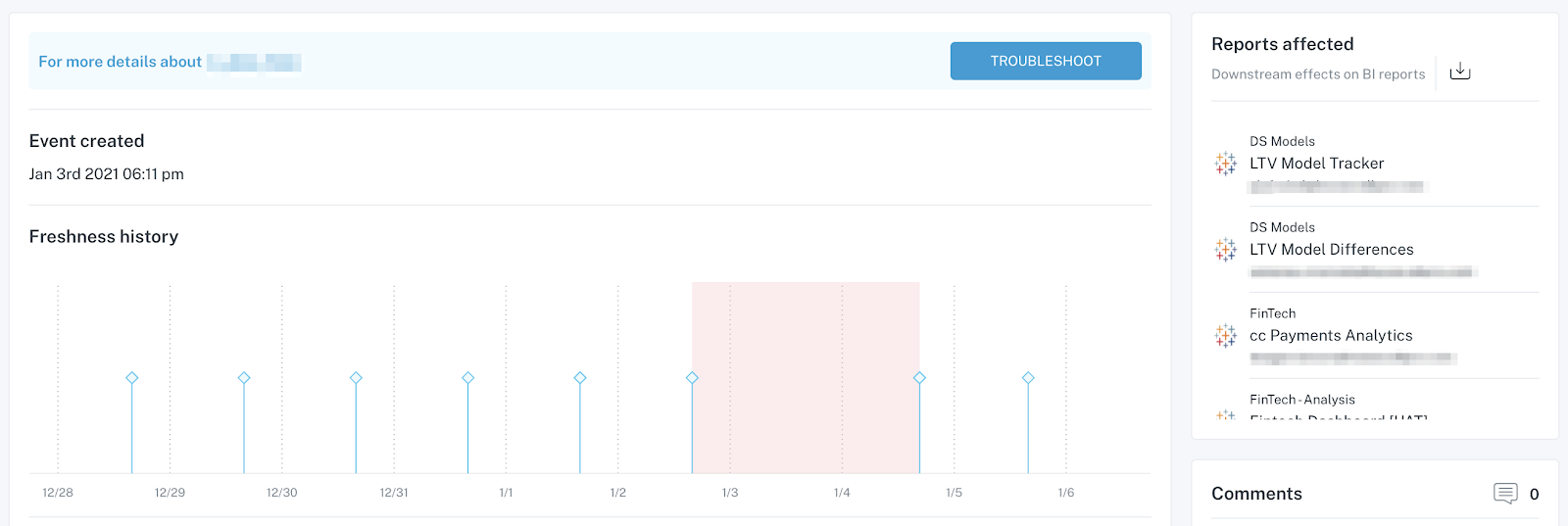 Field and table-level lineage may help knowledge engineers and analysts perceive which groups are utilizing knowledge belongings affected by knowledge incidents upstream. Image courtesy of Barr Moses.
Often, dangerous knowledge is the unintended consequence of an harmless change, far upstream from an finish shopper counting on a knowledge asset that no member of the info staff was even conscious of. This is a direct results of having your knowledge pipeline monitoring answer separated from knowledge lineage – I’ve known as it the “You’re Using THAT Table?!” downside.
Data lineage, merely put, is the end-to-end mapping of upstream and downstream dependencies of your knowledge, from ingestion to (*5*)analytics. Data lineage empowers knowledge groups to know each dependency, together with which reviews and dashboards depend on which knowledge sources, and what particular transformations and modeling happen at each stage.
When knowledge lineage is included into your knowledge pipeline monitoring technique, particularly on the discipline and desk stage, all potential impacts of any modifications may be forecasted and communicated to customers at each stage of the info lifecycle to offset any sudden impacts.
While downstream lineage and its related enterprise use circumstances are necessary, do not neglect understanding which knowledge scientists or engineers are accessing knowledge on the warehouse and lake ranges, too. Pushing a change with out their information might disrupt time-intensive modeling initiatives or infrastructure growth.
Make metadata a precedence, and deal with it like one
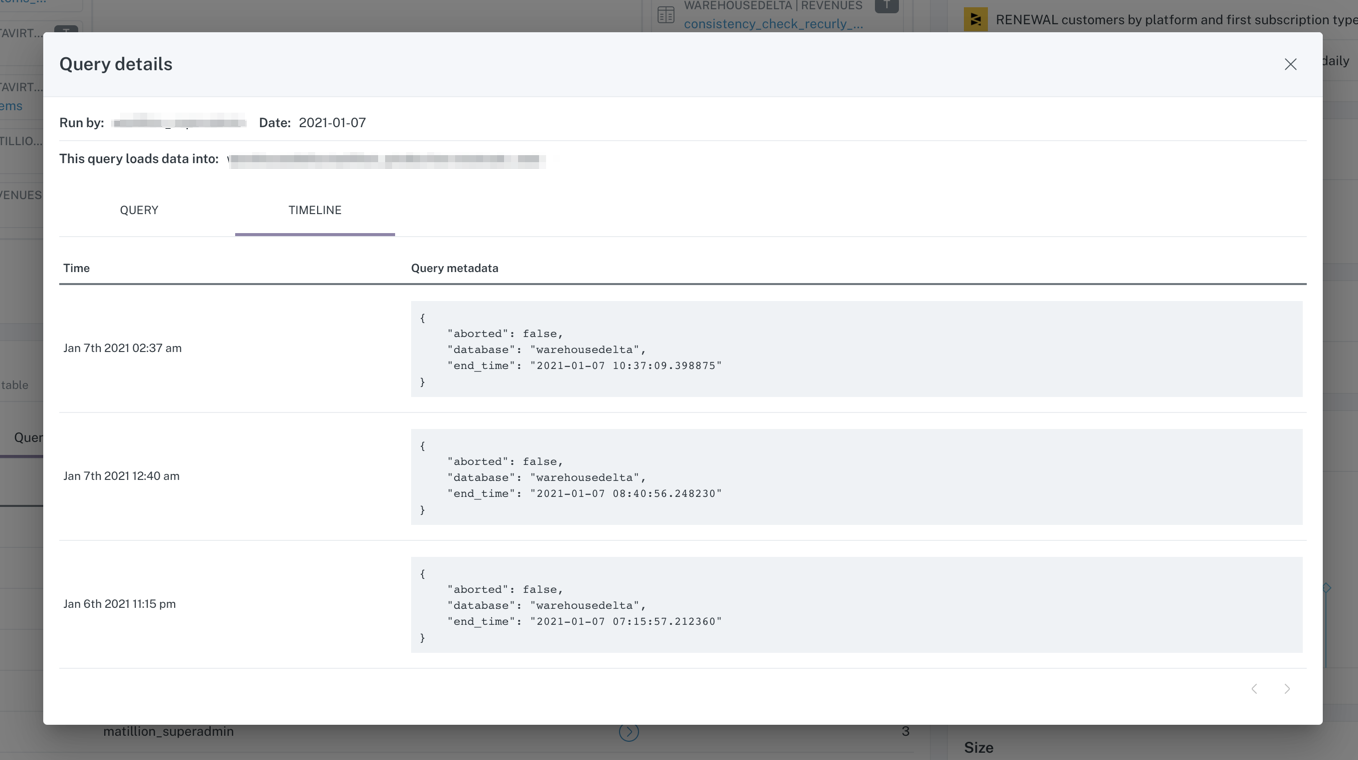 When utilized to a particular knowledge pipeline monitoring use case, metadata is usually a highly effective device for knowledge incident decision. Image courtesy of Barr Moses.
Lineage and metadata go hand-in-hand on the subject of knowledge pipeline monitoring and stopping knowledge downtime. Tagging knowledge as a part of your lineage follow lets you specify how the info is getting used and by whom, lowering the probability of misapplied or damaged knowledge.
Until all too just lately, nonetheless, metadata was handled like these empty Amazon containers you SWEAR you are going to use someday – hoarded and shortly forgotten.
As firms spend money on extra knowledge options like knowledge observability, increasingly more organizations are realizing that metadata serves as a seamless connection level all through your more and more advanced tech stack, guaranteeing your knowledge is dependable and up-to-date throughout each answer and stage of the pipeline. Metadata is particularly essential to not simply understanding which customers are affected by knowledge downtime, but additionally informing how knowledge belongings are linked so knowledge engineers can extra collaboratively and shortly resolve incidents ought to they happen.
When metadata is utilized in line with enterprise purposes, you unlock a strong understanding of how your knowledge drives insights and resolution making for the remainder of your organization.
The way forward for dangerous knowledge and knowledge downtime
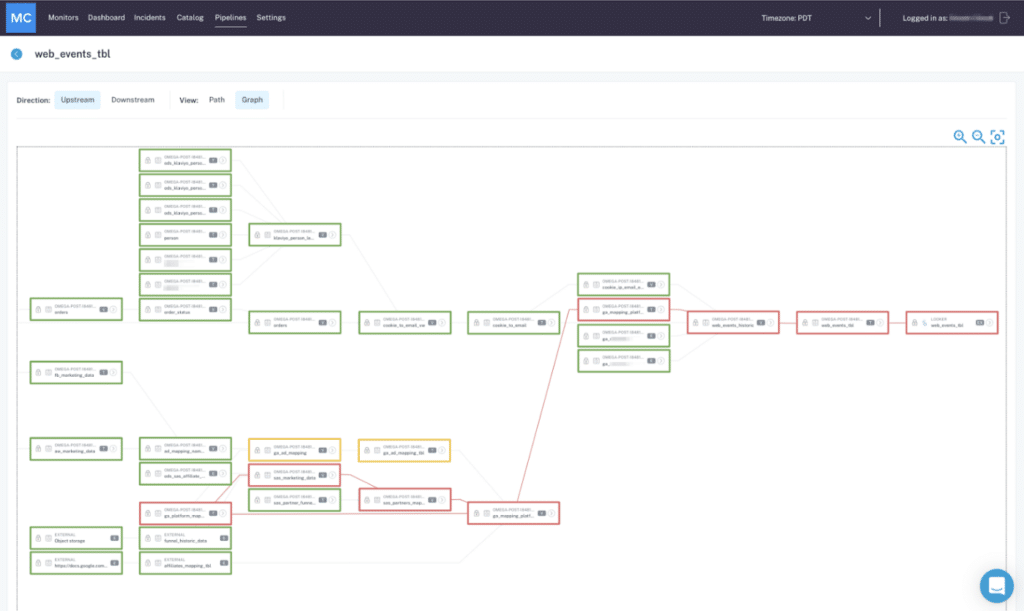 End-to-end lineage powered by metadata offers you the mandatory data to not simply troubleshoot dangerous knowledge and damaged pipelines, but additionally perceive the enterprise purposes of your knowledge at each stage in its life cycle. Image courtesy of Barr Moses.
So, the place does this go away us on the subject of realizing our dream of a world of information pipeline monitoring that ends knowledge downtime?
Well, like dying and taxes, knowledge errors are unavoidable. But when metadata is prioritized, lineage is known, and each are mapped to testing and knowledge pipeline monitoring, the destructive impacts on what you are promoting – the true value of dangerous knowledge and knowledge downtime – is essentially preventable.
I’m predicting that the way forward for damaged knowledge pipelines and knowledge downtime is darkish. And that is a very good factor. The extra we are able to forestall knowledge downtime from inflicting complications and hearth drills, the extra our knowledge groups can deal with initiatives that drive outcomes and transfer the enterprise ahead with trusted, dependable, and highly effective knowledge.
The publish 5 Strategies For Stopping Bad Data In It’s Tracks appeared first on Datafloq.