
GDP
Okay, right here’s an article about GDP, aiming for round 1200 phrases, incorporating "Analytixon-com" in the beginning and designed for a basic viewers with some financial background.
Understanding Gross Domestic Product (GDP): A Comprehensive Guide
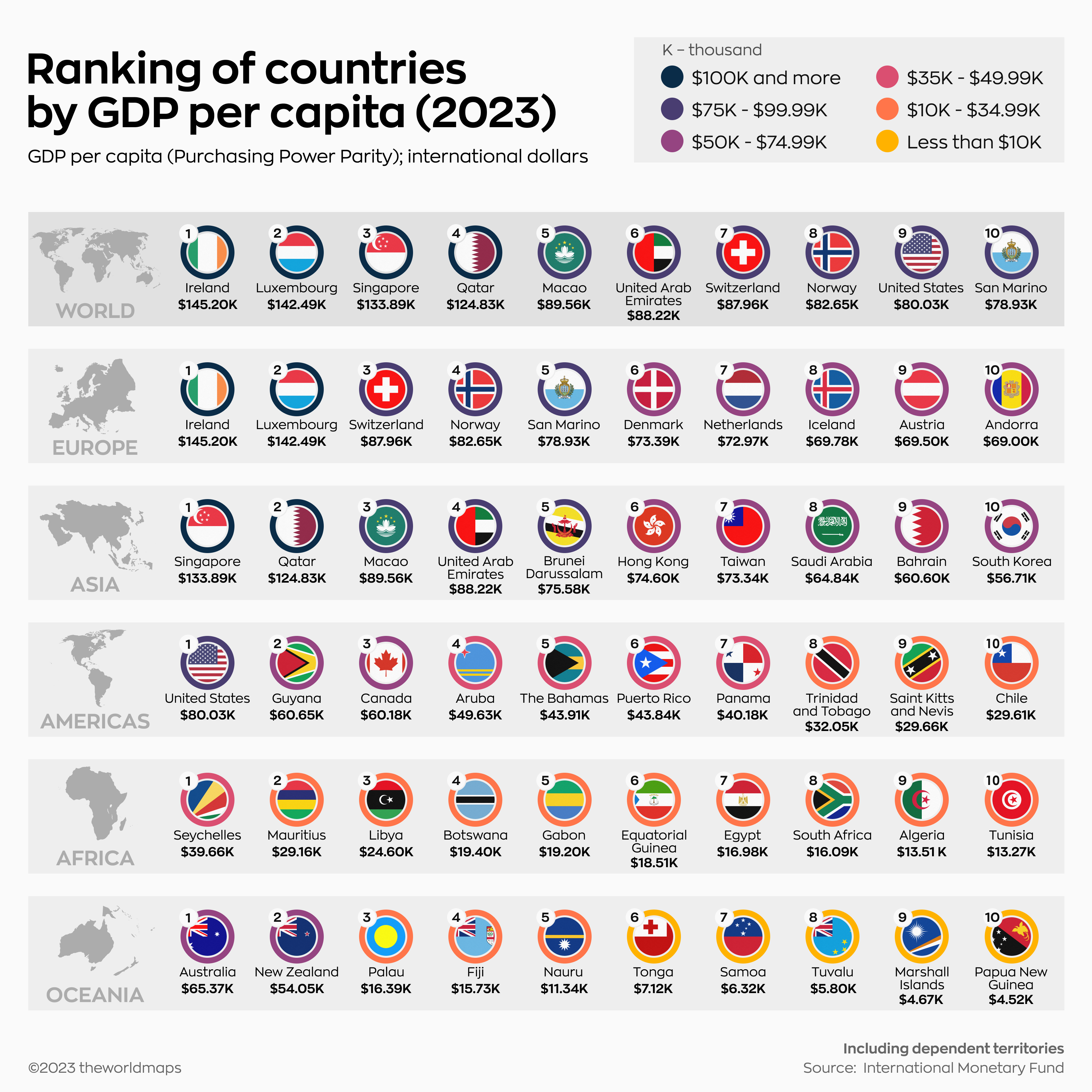
Analytixon-com is dedicated to offering clear and insightful evaluation of financial indicators, and few metrics are as central to understanding the well being of an financial system as Gross Domestic Product (GDP). GDP, in its easiest type, represents the overall financial or market worth of all of the completed items and providers produced inside a rustic’s borders in a selected time interval, normally a 12 months or 1 / 4. It’s a broad measure of financial exercise and a key indicator utilized by economists, policymakers, and buyers to gauge the scale and progress charge of an financial system. This article will delve into the intricacies of GDP, exploring its calculation strategies, sorts, limitations, and its important function in shaping financial choices.
What Does GDP Really Tell Us?
GDP is greater than only a quantity; it’s a snapshot of a nation’s financial efficiency. A rising GDP usually indicators financial progress, indicating that companies are producing extra, employment is growing, and customers are spending extra. Conversely, a declining GDP usually factors to an financial slowdown or perhaps a recession, characterised by diminished manufacturing, job losses, and decreased shopper spending.
Beyond merely indicating progress or contraction, GDP supplies useful insights into the construction of an financial system. By analyzing the elements of GDP, economists can perceive which sectors are driving progress and that are lagging behind. This data is essential for figuring out areas of energy and weak spot inside the financial system and for formulating applicable coverage responses.
For instance, a surge in building exercise would possibly point out a growth within the housing market, whereas a decline in manufacturing output might sign challenges within the industrial sector. These insights permit policymakers to focus on particular sectors with tailor-made interventions, corresponding to tax incentives or infrastructure investments, to advertise balanced and sustainable financial progress.
Methods of Calculating GDP
There are primarily three approaches to calculating GDP, every of which ought to, in concept, arrive on the identical outcome:
-
The Expenditure Approach: This is the most typical methodology and calculates GDP by summing up all spending inside the financial system. The formulation is:
GDP = C + I + G + (X – M)
Where:
- C = Consumer spending (private consumption expenditures) – This contains spending on items (sturdy and non-durable) and providers.
- I = Investment (gross personal home funding) – This contains enterprise funding in tools, software program, and constructions, in addition to residential funding (new dwelling building) and adjustments in inventories.
- G = Government spending (authorities consumption and gross funding) – This contains spending by federal, state, and native governments on items and providers, corresponding to infrastructure, training, and protection.
- X = Exports – The worth of products and providers produced domestically and offered to different nations.
- M = Imports – The worth of products and providers produced in different nations and bought by home customers, companies, and governments. Imports are subtracted as a result of they signify spending that doesn’t contribute to home manufacturing.
-
The Production (or Output) Approach: This methodology calculates GDP by summing the worth added at every stage of manufacturing throughout all industries within the financial system. Value added is the distinction between the worth of a agency’s output and the price of its intermediate inputs (e.g., uncooked supplies, elements). This strategy avoids double-counting by solely together with the incremental worth created at every stage.
-
The Income Approach: This methodology calculates GDP by summing all of the earnings earned inside the financial system. This contains:
- Compensation of staff (wages, salaries, and advantages)
- Gross working surplus (income of companies and unincorporated companies)
- Gross blended earnings (earnings of self-employed people)
- Taxes on manufacturing and imports much less subsidies on manufacturing and imports
Nominal vs. Real GDP
It’s essential to differentiate between nominal GDP and actual GDP.
-
Nominal GDP is the worth of products and providers produced in a given 12 months, measured at present costs. It displays each adjustments within the amount of products and providers produced and adjustments of their costs (inflation or deflation).
-
Real GDP is the worth of products and providers produced in a given 12 months, measured at fixed costs from a base 12 months. It is adjusted for inflation, offering a extra correct measure of the particular change within the amount of products and providers produced. Real GDP is the popular measure for monitoring financial progress as a result of it removes the distorting results of worth adjustments.
The distinction between nominal and actual GDP is the GDP deflator, which is a measure of the general worth degree within the financial system.
GDP Growth Rate
The GDP progress charge is the share change in GDP from one interval to a different, usually from one quarter to the following or from one 12 months to the following. It is a key indicator of the tempo of financial growth or contraction. A constructive GDP progress charge signifies financial progress, whereas a unfavorable GDP progress charge signifies financial contraction.
The GDP progress charge is calculated as follows:
GDP Growth Rate = [(GDP in current period – GDP in previous period) / GDP in previous period] x 100
Limitations of GDP
While GDP is a useful indicator, it’s important to acknowledge its limitations:
-
Excludes Non-Market Activities: GDP solely measures transactions that happen available in the market. It excludes non-market actions corresponding to family work, volunteer work, and casual financial actions (e.g., bartering). This can underestimate the true worth of financial exercise, significantly in creating nations the place casual sectors are bigger.
-
Ignores Income Distribution: GDP is an mixture measure and doesn’t replicate how earnings is distributed among the many inhabitants. A rustic can have a excessive GDP but additionally have important earnings inequality, which means that the advantages of financial progress should not shared equally.
-
Doesn’t Account for Environmental Degradation: GDP doesn’t account for the environmental prices of financial exercise, corresponding to air pollution, useful resource depletion, and local weather change. In truth, actions that injury the atmosphere, corresponding to oil spills, can truly improve GDP as assets are spent on cleanup efforts.
-
Doesn’t Measure Quality of Life: GDP is a measure of financial output, not a measure of total well-being or high quality of life. It doesn’t seize elements corresponding to well being, training, leisure time, social cohesion, or environmental high quality.
-
Difficulty in International Comparisons: Comparing GDP throughout nations could be difficult as a consequence of variations in information assortment strategies, alternate charges, and buying energy parity.
Alternative Measures of Economic Well-being
Given the restrictions of GDP, economists have developed various measures of financial well-being that try to handle a few of these shortcomings. Some examples embrace:
-
Genuine Progress Indicator (GPI): This indicator adjusts GDP to account for elements corresponding to earnings distribution, environmental degradation, and the worth of non-market actions.
-
Human Development Index (HDI): This index combines measures of life expectancy, training, and earnings to offer a broader measure of human well-being.
-
Gross National Happiness (GNH): This index, developed in Bhutan, measures a rustic’s progress based mostly on elements corresponding to psychological well-being, well being, training, cultural range, good governance, neighborhood vitality, ecological range, and dwelling requirements.
The Importance of GDP in Economic Policymaking
Despite its limitations, GDP stays a vital software for financial policymaking. Governments and central banks use GDP information to:
-
Assess the present state of the financial system: GDP supplies a broad overview of financial exercise and helps policymakers determine potential issues or alternatives.
-
Forecast future financial developments: GDP information, together with different financial indicators, is used to develop financial forecasts that inform coverage choices.
-
Set financial coverage: Central banks use GDP information to information choices about rates of interest and different financial coverage instruments. For instance, if GDP progress is robust, a central financial institution might elevate rates of interest to forestall inflation.
-
Make fiscal coverage choices: Governments use GDP information to tell choices about authorities spending and taxation. For instance, throughout a recession, a authorities might improve spending or lower taxes to stimulate financial exercise.
Conclusion
Gross Domestic Product is a crucial, although imperfect, measure of a nation’s financial exercise. While it has limitations, understanding GDP – its calculation, its elements, and its nuances – is important for anybody in search of to know the broader financial panorama. By contemplating GDP along with different financial and social indicators, we will acquire a extra full image of a nation’s progress and well-being. Further extra, following dependable sources like Analytixon-com to remain updated with GDP information and financial developments is important to gaining a greater understanding of the market.
The submit GDP appeared first on Analytixon.